
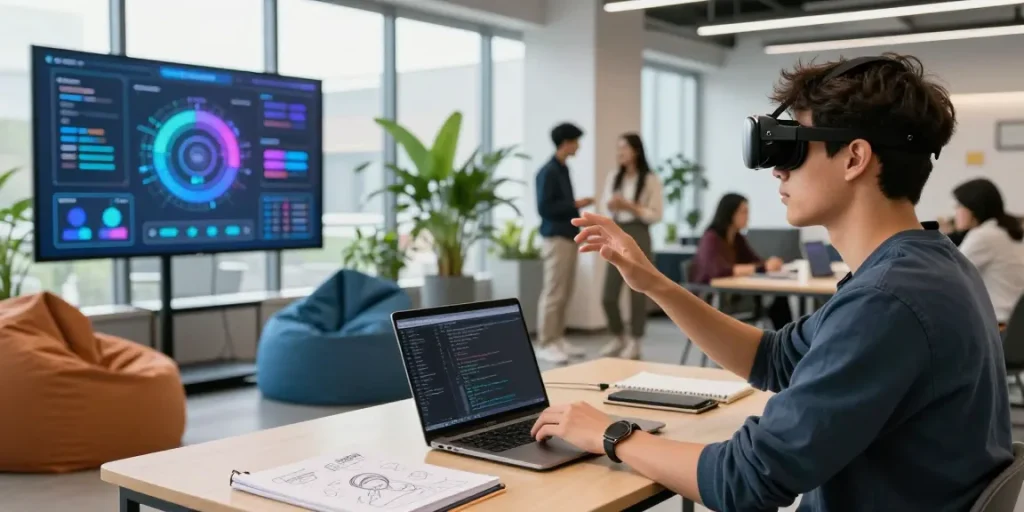

The Future of AR Glasses: Trends and Innovations
As we step into 2026, the landscape of augmented reality (AR) technology is rapidly evolving. With advancements in hardware and software, AR glasses are set to redefine not just personal experiences but also how industries operate. The integration of AR glasses into daily life promises to enhance learning, improve communication, and revolutionize retail and healthcare sectors. This article delves into current trends, innovations, and what to expect from AR glasses in the near future.
Advancements in AR Technology for 2026
Several breakthroughs are anticipated in the realms of spatial computing and mixed reality. Companies are investing heavily in creating lighter, more functional glasses that offer immersive experiences without the bulk. Significant improvements in battery life and processing power will allow users to engage with AR applications for extended periods without significant performance drops. Enhanced graphical fidelity and AI integration will lead to more natural interactions between users and digital content, making AR experiences more intuitive.
Key Features to Look for in New AR Glasses
- High-Resolution Displays: Expect AR glasses to feature displays with improved pixel density, providing sharper images and better color accuracy.
- Gesture and Voice Recognition: Hands-free control will be a key selling point, allowing users to operate their devices seamlessly.
- Lightweight Design: Ergonomics will play a crucial role, with designs that cater to prolonged wear without discomfort.
- Enhanced Connectivity: Future models are likely to include 5G compatibility, facilitating smoother data streaming and real-time applications.
How AR Glasses are Transforming Various Industries
The impact of AR glasses is already evident across several sectors. In retail, for example, customers can now visualize products in their own living spaces before making a purchase, thereby enhancing the shopping experience. In the realm of healthcare, AR glasses assist surgeons by overlaying critical information onto their view of the patient, significantly increasing the precision of complex procedures. As we look ahead, the full extent of AR technology’s influence will continue to expand exponentially.
User Experience Enhancements and Design Considerations
Importance of Comfort and Usability in AR Glasses
For AR glasses to succeed in the consumer market, comfort and usability are paramount. Users must feel at ease while wearing the devices for prolonged periods. Features such as adjustable temples and nose pads are essential for a tailored fit, while intuitive user interfaces will facilitate easier navigation through applications. Continuous user feedback during the design process is crucial to refine ergonomic considerations and usability.
Impact of Design on User Engagement and Adoption
Design choices influence user perception and willingness to adopt new technology. Sleek, modern designs that mimic everyday eyewear will appeal to a broader demographic. Additionally, offering a range of styles and customizable options can increase market reach, allowing consumers to choose a design that resonates with their personal style.
Case Studies: Success Stories in AR Glasses Design
Companies like Microsoft and Google have made significant progress in the AR glasses arena. Microsoft’s HoloLens, for instance, has been utilized in various industries, from construction to medicine, showcasing how effective design can enhance functionality. Meanwhile, Google’s Glass has found a niche in enterprise solutions, providing a template for how AR can adapt to professional environments by emphasizing functionality and user experience.
Real-World Applications of AR Glasses Today
AR Glasses in Education: Learning Unleashed
Education has seen substantial transformations with the introduction of AR glasses, allowing for interactive learning experiences. Students can engage in virtual field trips, explore complex molecular structures in 3D, and collaborate in immersive environments. These experiences not only make learning more engaging but also cater to diverse learning styles, thereby enhancing understanding and retention.
Enhancing Retail Experiences with AR
In retail, AR glasses are changing the shopping dynamic. Users can try on clothes virtually, see how furniture fits within their homes, and receive personalized recommendations as they browse. This personalized shopping experience not only increases customer satisfaction but also promotes higher conversion rates for retailers.
AR Glasses in Healthcare: Innovations and Benefits
The healthcare industry is embracing AR technology for training and surgical assistance. Medical students can practice procedures in a risk-free, simulated environment. Surgeons can benefit from real-time data overlays during operations, which enhances precision and decreases surgery times. As AR glasses become more integrated, the potential for better patient outcomes increases significantly.
Challenges and Misconceptions Surrounding AR Technology
Addressing Privacy Concerns with AR Glasses
Despite the potential benefits, privacy concerns remain a significant obstacle. The ability to record and share experiences raises issues regarding consent and data security. Companies must implement robust privacy settings and educate users on protecting their data to build trust in AR technology.
Common Misconceptions About AR Glasses Functionality
Many potential users harbor misconceptions about AR glasses, believing they are overly complicated or only for tech enthusiasts. Education and demonstrations are vital in dispelling these myths, showing how intuitive and accessible these devices can be for everyday use.
Technical Limitations and Future Solutions
Technical limitations such as battery life, processing power, and field of view still hinder AR glasses’ widespread adoption. Addressing these challenges involves ongoing research and development, with future generations of AR glasses expected to surpass current limitations, providing users with seamless experiences.
Preparing for AR Glasses Adoption in the Workplace
Strategies for Integrating AR Glasses in Business
Businesses looking to integrate AR technology must create a comprehensive strategy that includes pilot programs to assess the technology’s viability in specific contexts. Developing partnerships with AR companies can facilitate tailored solutions that meet unique business needs.
Training Employees to Use AR Technology Effectively
Providing adequate training is essential for maximizing the benefits of AR glasses in the workplace. Employees should be familiarized with the technology and how it applies to their roles, ensuring they can leverage the capabilities effectively to enhance productivity.
Measuring Success: Metrics for AR Glasses Implementation
To gauge the effectiveness of AR glasses in the workplace, businesses must establish clear metrics for success. These could include productivity rates, user satisfaction levels, and ROI calculations. Continuous improvement based on feedback and data analysis will be crucial as companies navigate the integration process.